2026-10-03 · Ryan Mitchell
Spray Foam vs Fiberglass: An Honest Comparison for Bixby Homeowners
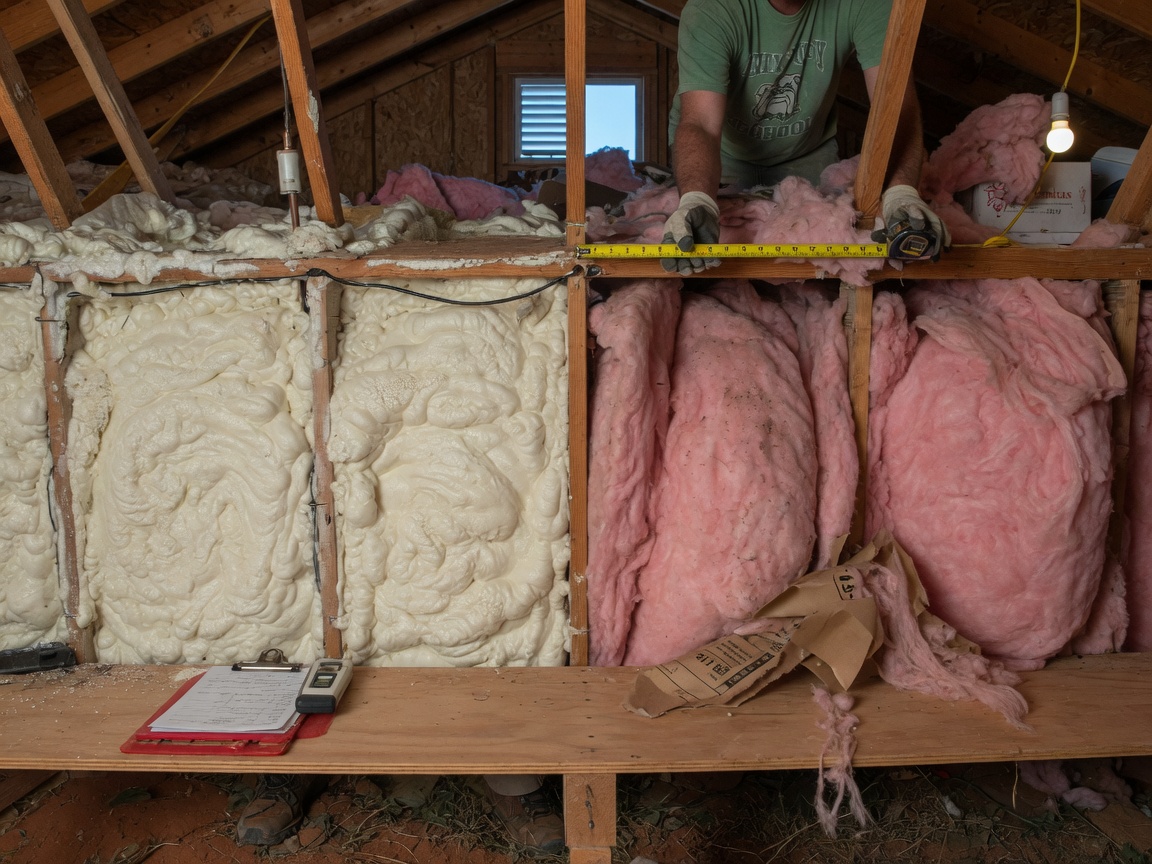
Spray foam insulation delivers stronger air sealing and moisture control than fiberglass for most Bixby homes, with installed costs running $1.50–$3.00 per board foot versus $0.80–$1.50 for fiberglass batts or blown-in.
Upfront Costs for Bixby Properties
Bixby homes in neighborhoods such as Bixby Ranch Estates and The Village at Ashton Creek often feature attics and crawl spaces that determine material quantities. Spray foam requires professional equipment and precise application, pushing labor higher than fiberglass rolls that any crew can handle with basic tools. Homeowners near Washington Irving Memorial Park or the Bixby Sports Complex frequently request closed-cell products for rim joists because the material expands to fill irregular framing left from 1980s and 1990s construction. Fiberglass stays cheaper when the job involves simple open attics in South Bixby ranch houses, yet those savings shrink once vapor retarders and extra sealing tape are added. Quotes from crews working the 74008 zip code usually itemize board feet rather than square feet, giving owners a clearer picture before work begins.
Performance in Humid Subtropical Conditions
Bixby's hot summers and mild winters create repeated humidity swings that push moisture into wall cavities and attics. Closed-cell spray foam forms a continuous barrier that limits condensation on ductwork and roof decking, an advantage over fiberglass which can absorb moisture and lose R-value when wet. Homes within a few miles of the Arkansas River see higher dew points in July and August, making the difference noticeable on utility bills. Fiberglass works adequately in drier, well-ventilated attics but requires additional baffles and ridge vents to manage the same conditions. Local crews note that spray foam jobs in metal buildings and pole barns near Jenks and Broken Arrow show fewer callbacks for mold compared with fiberglass retrofits in similar structures.
Installation Realities in Local Housing Stock
Many Bixby residences built before 2000 have 2x4 walls and vented crawl spaces that favor different approaches. Spray foam crews can apply material directly to the underside of roof decking without disturbing existing drywall, a common request in The Village at Ashton Creek custom homes. Fiberglass installation often means removing insulation first, then fitting new batts around wiring and plumbing, which extends project time. Closed-Cell Spray Foam Insulation crews based at 15017 S Grant St, Bixby, OK 74008 schedule around the Mon–Sun 8am–7pm window to accommodate working homeowners. Both materials need proper personal protection during install, yet spray foam demands negative-air machines and full-face respirators more consistently than fiberglass.
Longevity and Ongoing Maintenance
Spray foam maintains its R-value and structural integrity for 20–30 years when applied correctly, while fiberglass can settle or compress within 8–12 years under attic traffic or repeated humidity cycles. Bixby owners who choose spray foam report fewer air leaks around can lights and plumbing penetrations after the first heating season. Fiberglass requires periodic checks for pest damage and moisture staining, especially in South Bixby homes with pier-and-beam foundations. Neither product needs replacement on a fixed schedule, but spray foam eliminates the need for additional vapor barriers that fiberglass jobs sometimes require.
When Fiberglass Remains Practical
Fiberglass still suits budget-conscious projects in older Bixby Ranch Estates homes where the priority is simply adding R-value without opening walls. It also works well in new construction where the builder already plans extensive air-sealing details before drywall. Spray Foam for New Custom Homes in Bixby: What to Plan Before Drywall outlines sequencing that avoids conflicts between trades. Homeowners weighing both options should inspect current insulation levels and measure actual air leakage with a blower door before deciding.