2026-10-03 · Ryan Mitchell
Open-Cell vs Closed-Cell Spray Foam: Which Is Right for Your Bixby Home?
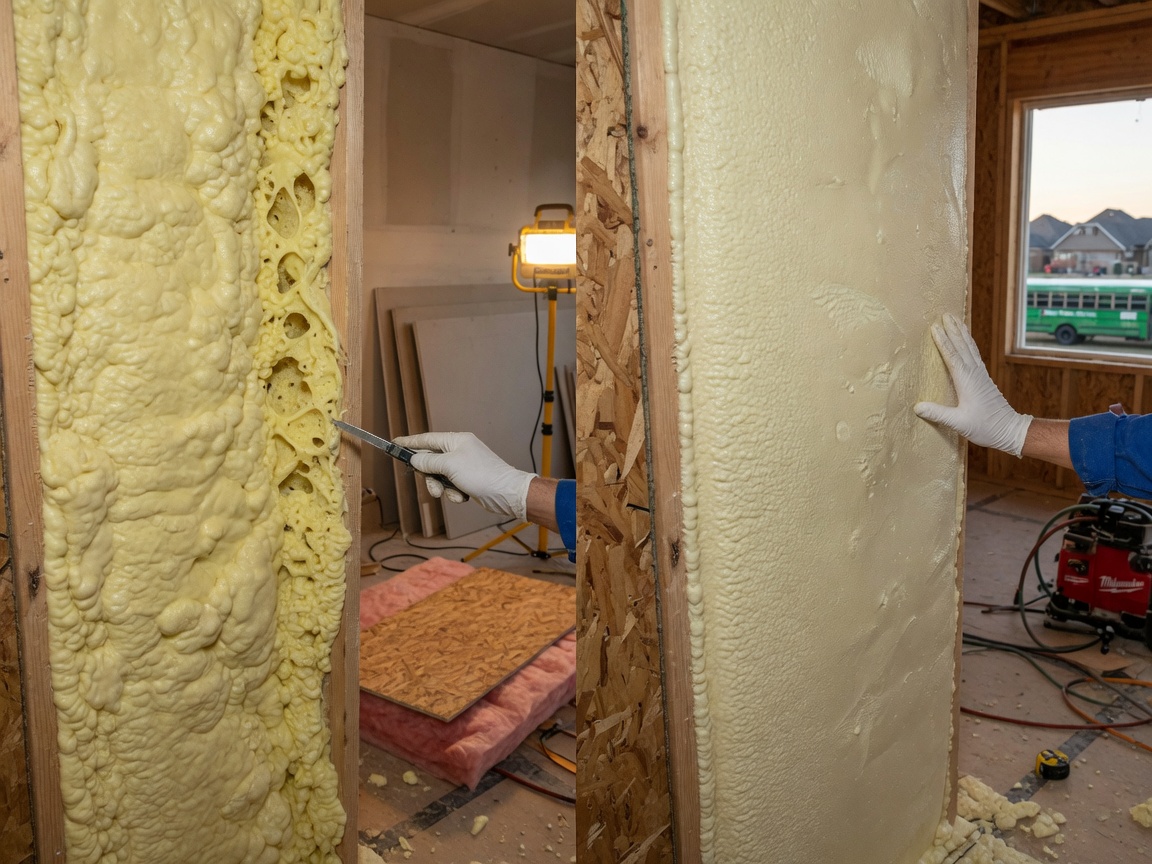
For most homes in Bixby, closed-cell spray foam is the right choice over open-cell because it delivers higher R-value per inch and blocks moisture in the humid subtropical climate with hot summers and mild winters.
Open-Cell Spray Foam Characteristics
Open-cell spray foam expands to fill cavities with a lighter, more flexible structure that allows some air movement. Installers apply it at 0.5 pounds per cubic foot density, which works well for sound dampening in interior walls but offers lower R-value around 3.6 per inch. In Bixby Ranch Estates homes with vaulted ceilings, this material can settle over time if not installed at proper thickness. It costs less upfront yet requires additional vapor barriers in areas prone to humidity spikes during summer. Homeowners in The Village at Ashton Creek often see open-cell used in attics where budget limits the project scope and moisture is managed through ventilation.
Closed-Cell Spray Foam Characteristics
Closed-cell spray foam forms a rigid, high-density barrier at 2 pounds per cubic foot that adds structural strength to walls and roofs. It provides R-value near 6.5 per inch and creates a complete air and water seal, which helps in South Bixby properties built on flat terrain where groundwater can affect crawl spaces. The material resists mold growth during mild winter thaws followed by rapid spring warming. Closed-cell spray foam insulation performs reliably in metal buildings near the Bixby Sports Complex where temperature swings stress older insulation. Its compressive strength also supports roof decks in custom homes around Washington Irving Memorial Park.
Climate and Housing Factors in Bixby
Bixby sits in Tulsa County with a humid subtropical pattern that brings high summer moisture and occasional winter freezes. Homes in South Bixby built before 1990 often have uninsulated crawl spaces and knob-and-tube wiring that closed-cell seals effectively without trapping condensation. Newer builds in Bixby Ranch Estates feature larger attics where open-cell may suffice if paired with ridge vents. Proximity to Jenks and Broken Arrow means many residents face similar pollen loads and humidity that favor closed-cell for long-term durability. Soil conditions along the Arkansas River floodplain increase the value of a moisture barrier in pole barn conversions.
Cost and Application Considerations
Material and labor for closed-cell typically run higher than open-cell by $1.50–$2.00 per board foot in the Tulsa area. Attic applications in 1,800-square-foot homes near The Village at Ashton Creek often total $4,000–$7,500 depending on depth and access. Attic spray foam insulation crews must account for summer heat that accelerates cure times. Wall injections in older South Bixby stock require smaller equipment to avoid disturbing plaster. Spray foam vs fiberglass comparisons show closed-cell lasting 30–50 years with minimal maintenance when applied correctly.
When Open-Cell Makes Sense
Open-cell remains practical in Bixby homes with existing good ventilation and no history of moisture intrusion. It works for interior partition walls in The Village at Ashton Creek where sound control matters more than thermal performance. Insulating vaulted ceilings in Bixby custom homes often defaults to closed-cell, yet open-cell can fit budget remodels in milder sections of the attic. Always inspect existing insulation and roof leaks before choosing. Contact the team at 15017 S Grant St, Bixby, OK 74008 during Mon–Sun 8am–7pm hours for a site-specific assessment.